ERP Systems Designed for Fabric Manufacturers in India, Thailand and Vietnam

Last Updated on March 16, 2026
4 Min read
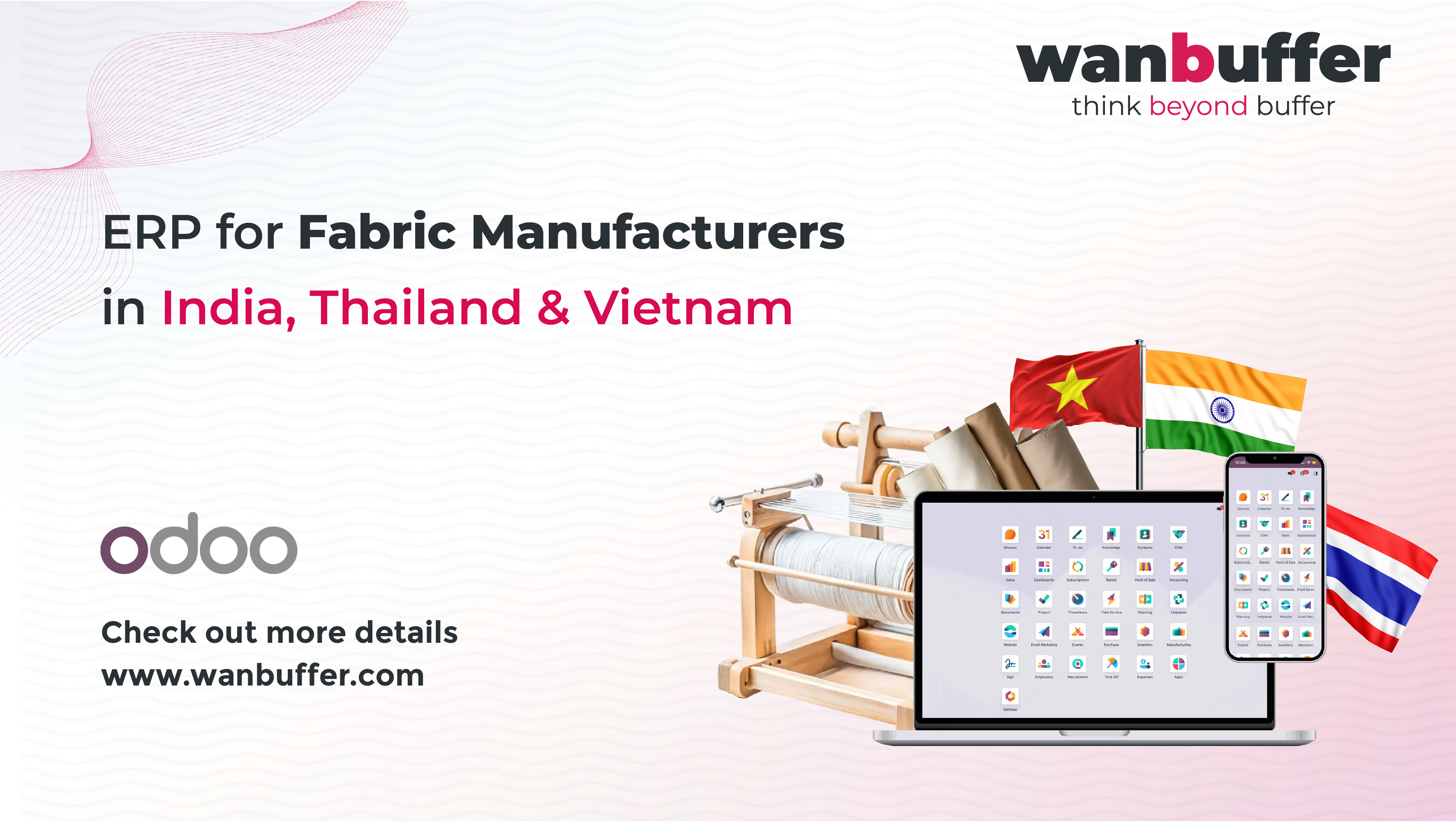
Table of Contents
- Introduction
- The Fabric Manufacturing Landscape in India, Thailand, and Vietnam
- Why Generic ERP Systems Fail Fabric Manufacturers
- What Fabric Manufacturers Actually Need from ERP
- Core ERP Capabilities for Textile and Fabric Production
- How Regional Manufacturing Complexity Shapes ERP Design
- Benefits of an ERP Built for Fabric Manufacturing
- How Wan Buffer Helps Fabric Manufacturers Modernize ERP
- Conclusion
- FAQs
1. Introduction
Fabric manufacturing is one of the most complex production environments in the world. From yarn procurement and dyeing processes to weaving, finishing, and dispatch, every stage requires precision, timing, and coordination.
Manufacturers in India, Thailand, and Vietnam face additional challenges due to export-driven demand, seasonal production cycles, and increasing pressure on delivery timelines.
This is why many textile companies are moving toward ERP systems specifically designed for fabric manufacturing workflows, rather than relying on generic ERP solutions.
2. The Fabric Manufacturing Landscape in India, Thailand, and Vietnam
These three countries represent some of the most important textile manufacturing hubs globally.
Key characteristics include:
- Large-scale export-oriented production
- High-volume seasonal orders
- Multiple production stages such as spinning, dyeing, weaving, and finishing
- Complex supplier and raw material networks
- Tight delivery schedules for global buyers
Managing these operations efficiently requires strong digital systems capable of handling real-time data and production planning.
3. Why Generic ERP Systems Fail Fabric Manufacturers
Many textile companies adopt ERP systems that were originally designed for general manufacturing.
Common problems include:
- Poor support for textile-specific production processes
- Limited visibility into yarn, greige, dyed, and finished fabric inventory
- Inflexible production planning tools
- Weak batch and lot tracking
- Difficulty managing multiple dyeing and finishing processes
Without industry-specific customization, generic ERP solutions struggle to support fabric manufacturing operations effectively.
4. What Fabric Manufacturers Actually Need from ERP
A well-designed ERP for fabric manufacturers must address the realities of textile production.
Essential capabilities include:
- Yarn and raw material tracking
- Dyeing and finishing process management
- Batch and lot-level inventory visibility
- Production planning across multiple machines and stages
- Accurate Bill of Materials (BOM) for fabrics
- Quality inspection and defect tracking
- Integration between sales orders, production planning, and dispatch
These features ensure that operations remain aligned from order intake to final shipment.
5. Core ERP Capabilities for Textile and Fabric Production
An ERP designed for fabric manufacturing should support:
- End-to-end production planning
- Real-time inventory management
- Machine and capacity scheduling
- Fabric roll and batch tracking
- Cost calculation and margin analysis
- Export documentation and compliance support
These capabilities help manufacturers maintain efficiency even during peak demand periods.
6. How Regional Manufacturing Complexity Shapes ERP Design
Manufacturers in India, Thailand, and Vietnam often operate across multiple factories, warehouses, and supplier networks.
ERP systems must therefore support:
- Multi-location production management
- Supplier coordination across regions
- Integration with export logistics and shipping
- Multi-currency and international trade requirements
Systems that fail to account for this complexity often create operational blind spots.
7. Benefits of an ERP Built for Fabric Manufacturing
When ERP systems are designed specifically for textile operations, manufacturers gain:
- Better production visibility
- Improved inventory accuracy
- Faster and more reliable production planning
- Reduced material wastage
- Stronger delivery performance
- More accurate cost and profitability analysis
These improvements help textile businesses remain competitive in global markets.
8. How Wan Buffer Helps Fabric Manufacturers Modernize ERP
Wan Buffer Services works with fabric and textile manufacturers to design ERP systems that match real production workflows.
Our approach includes:
- Textile-specific ERP customization
- Production planning optimization
- Inventory and batch tracking setup
- Integration between sales, manufacturing, and logistics
- Scalable ERP architecture for multi-location operations
This ensures that ERP systems support the real needs of fabric manufacturing businesses.
9. Conclusion
Fabric manufacturing requires precision, coordination, and real-time operational visibility. Generic ERP systems often struggle to support the complexity of textile production across multiple stages and locations.
By implementing ERP systems designed specifically for fabric manufacturing, companies in India, Thailand, and Vietnam can improve planning, control costs, and deliver orders more reliably.
Contact Wan Buffer Services to explore ERP solutions designed specifically for fabric manufacturing operations.
10. FAQs
-
Is Odoo suitable for fabric manufacturing ERP?
Yes, Odoo can be customized to support textile production workflows including dyeing, weaving, and finishing.
-
What makes textile ERP different from regular ERP?
Textile ERP includes batch tracking, fabric production planning, and process-specific workflows designed for textile manufacturing environments.
-
Can ERP help reduce fabric production delays?
Yes, better planning, inventory visibility, and workflow coordination help reduce production bottlenecks and improve delivery timelines.
